

Let’s face it—shopping for a diamond can feel like cramming for a test you didn’t sign up for.
Clarity. Colour. Cut. Carat. It’s a whole thing.
And when you throw lab created diamonds into the mix, plus a diamond colour and clarity chart that looks like something out of a science textbook… it’s easy to feel overwhelmed.
But don’t worry—you don’t need a gemology degree to make a smart choice.
Just a bit of guidance (and maybe a coffee).
So, What’s the Story with All These Letters and Numbers?
Here’s the thing.
When people talk about “the best” diamond, what they usually mean is the sparkliest or the clearest—or let’s be real, the most expensive one in the store.
But “best” is subjective.
That’s why the diamond colour and clarity chart exists. It’s basically a universal way to grade diamonds—so whether it’s mined or lab grown, there’s a standard to compare.
Now, when it comes to lab created diamonds, these charts still apply.
They’re not some budget-friendly knock-off. They’re real diamonds—chemically, physically, optically identical to mined ones. The only difference? Their origin story. (Hint: no digging required.)
So yes, colour and clarity matter. But how much? That depends on you.
A Quick Crash Course (Without the Boring Bits)
Let’s break down what these two things really mean—without putting you to sleep.
Diamond Colour
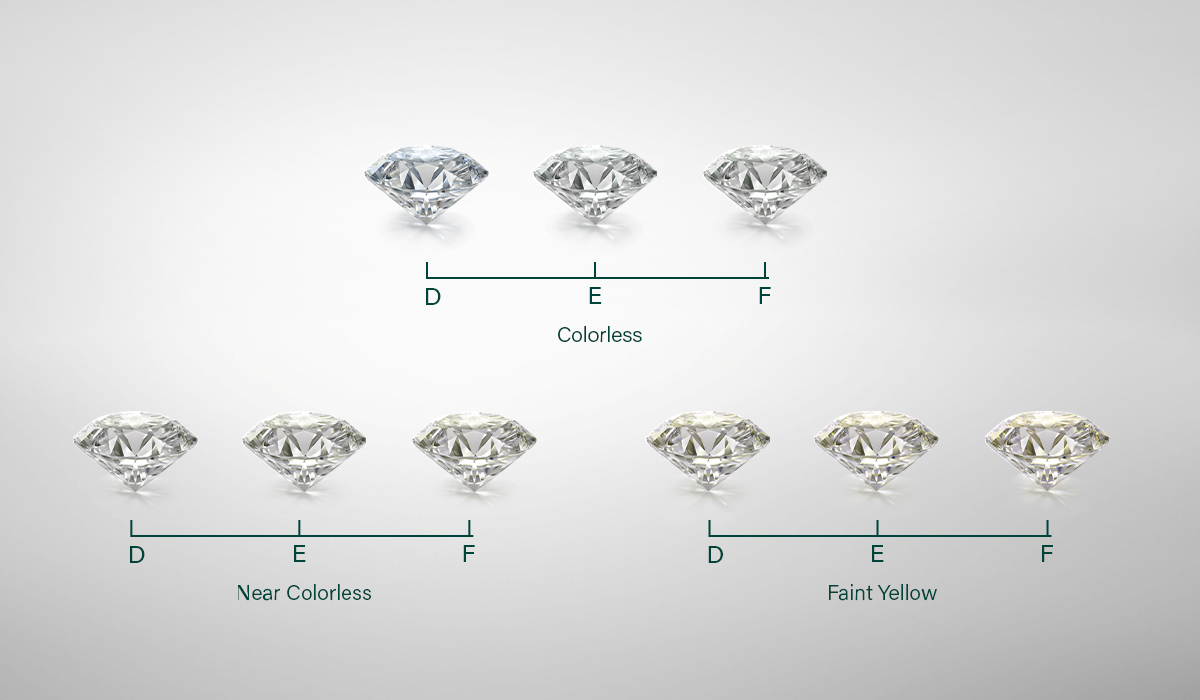
Diamonds are graded from D (colorless) to Z (noticeably yellow or brown).
- D–F: Colourless. These are the “ice queen” diamonds—super clear, super rare (and yeah, a bit pricey).
- G–J: Near colorless. Still beautiful, but may have a hint of warmth. Most people can’t even tell unless they’re comparing side by side.
- K–M and beyond: Slight yellow tones. Can actually look amazing in vintage or yellow gold settings.
Opinion time: If you’re going with a yellow gold or rose gold band, you can totally go for a slightly warmer diamond (like H–J) and save a chunk of cash.
Diamond Clarity
This refers to the tiny imperfections (called inclusions or blemishes) in or on the diamond.
- FL (Flawless) and IF (Internally Flawless): Basically unicorn diamonds. Gorgeous, rare, and expensive.
- VVS1–VVS2: Very, very slight inclusions. Almost impossible to see without serious magnification.
- VS1–VS2: Very slight inclusions. The sweet spot for most buyers—great balance of value and beauty.
- SI1–SI2: Slight inclusions. These are more visible, but often still hidden to the naked eye.
- I1 and below: Included. Imperfections may be more obvious, especially in larger stones.
Pro tip: Most lab created diamonds fall in the VS or VVS range. So you’re already getting a cleaner stone for your money—win!
Trends, Tips & Smart Shortcuts
When it comes to choosing your diamond, here’s what people actually care about:
1. What Looks Good to the Eye
Seriously. Most people can’t tell a D from a G, or a VS1 from a SI1—especially once the diamond is set. Focus on what you see, not just what the chart says.
2. Size vs. Specs
Would you rather have a slightly bigger stone with a small inclusion… or a flawless one that’s half the size?
There’s no wrong answer. But it’s something to think about.
3. Your Setting Matters
White gold or platinum makes color stand out. Yellow gold, on the other hand, hides warmth.
So if you’re eyeing a slightly tinted stone, pair it with a warm metal and no one will know the difference.
4. Lab Created = More Bang for Your Buck
With lab created diamonds, you can often afford a better clarity or color grade for the same price—or go up in size without going into debt.
And let’s be honest… who doesn’t love a little sparkle upgrade?
Why This Matters (Where You Live)
Here’s the part that no one talks about: your location can totally influence how you shop.
In cities like Hong Kong, London, or New York, clarity-obsessed buyers tend to prioritize VVS diamonds—because that’s what the market pushes.
But in places like Melbourne or Vancouver, shoppers are leaning more toward ethical choices and value, which makes lab created diamonds a total no-brainer.
Even local jewellers are starting to stock more lab grown options—especially ones that hit that “sweet spot” on the diamond colour and clarity chart.
And let’s be real—most people won’t ask what clarity your stone is. They’ll just go:
“Wow. That’s stunning.”
And that’s what matters.
The Process (A Chill Version of Diamond Shopping)
Still feeling a bit “info overload”? Totally normal. Let’s simplify it.
Here’s a no-stress way to shop:
Step 1: Set Your Budget
Be realistic. And remember—you’re getting more value with lab created diamonds, so your money goes further.
Step 2: Choose Your Priorities
- Want the biggest size possible? You might go lower on clarity or color.
- Want a super-clear stone? Go VS1 or better and drop a little on size.
- Want it all? Pick lab grown. You’ll get a killer deal without compromising.
Step 3: Look at Real Videos/Images
Don’t trust just the grading report. See how it actually looks—under different lights, on real hands, and in the setting you want.
Step 4: Ask Questions
Good jewellers (especially ones specializing in lab created diamonds) won’t mind answering “newbie” questions.
In fact, they’ll probably appreciate it.
Final Thoughts
At the end of the day, the diamond colour and clarity chart isn’t meant to confuse you—it’s meant to empower you.
And when you pair that knowledge with the value and ethics of lab created diamonds?
You’ve got a modern love story with a modern sparkle to match.
Forget the pressure. Forget the perfect score.
Choose the diamond that feels right for you.
Because diamonds might be graded… but love? That one’s priceless.